




The Supreme Court has clarified that couples who had frozen embryos before the Surrogacy (Regulation) Act, 2021 came into force cannot be disqualified from pursuing surrogacy solely on the basis of the age restrictions under the new law. The ruling ensures that such couples are not unfairly deprived of their right to parenthood because of a change in legislation after they had already initiated the process.
The Act prescribes that the intending woman must be aged 23 to 50 years, and the man must be between 26 and 55 years to avail of surrogacy. However, the Court observed that applying these age restrictions to couples who had already taken steps under the earlier legal regime, such as freezing embryos, would amount to a retrospective application of the law. Such an approach, the bench held, would be unjust and contrary to principles of fairness.
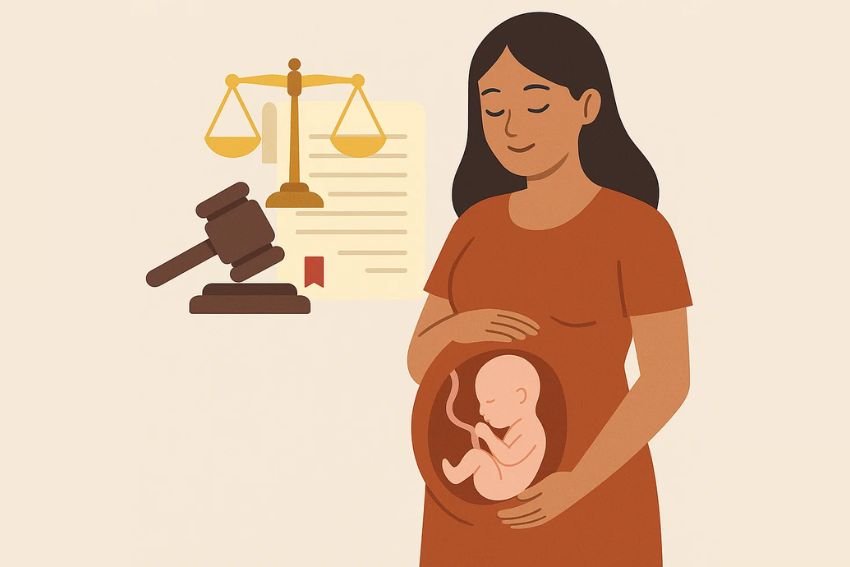
The judges noted that the surrogacy process is often a long and emotionally challenging journey for couples. Once embryos have been lawfully preserved, the right to use them cannot be taken away merely due to subsequent legislative changes. Denying couples in this situation would effectively nullify the investment, planning, and expectations they had before the 2021 law came into effect.
By drawing this distinction, the Court upheld the continuity of reproductive rights for couples already engaged in surrogacy procedures. It highlighted that the purpose of the Act was to regulate surrogacy and prevent exploitation, not to retroactively disrupt lawful processes undertaken in good faith.
This decision provides significant relief to couples who were caught in legal uncertainty following the enactment of the Surrogacy Act. It reaffirms that the law must operate prospectively and that fundamental rights associated with family and parenthood cannot be denied on technical grounds arising from new age restrictions.
