



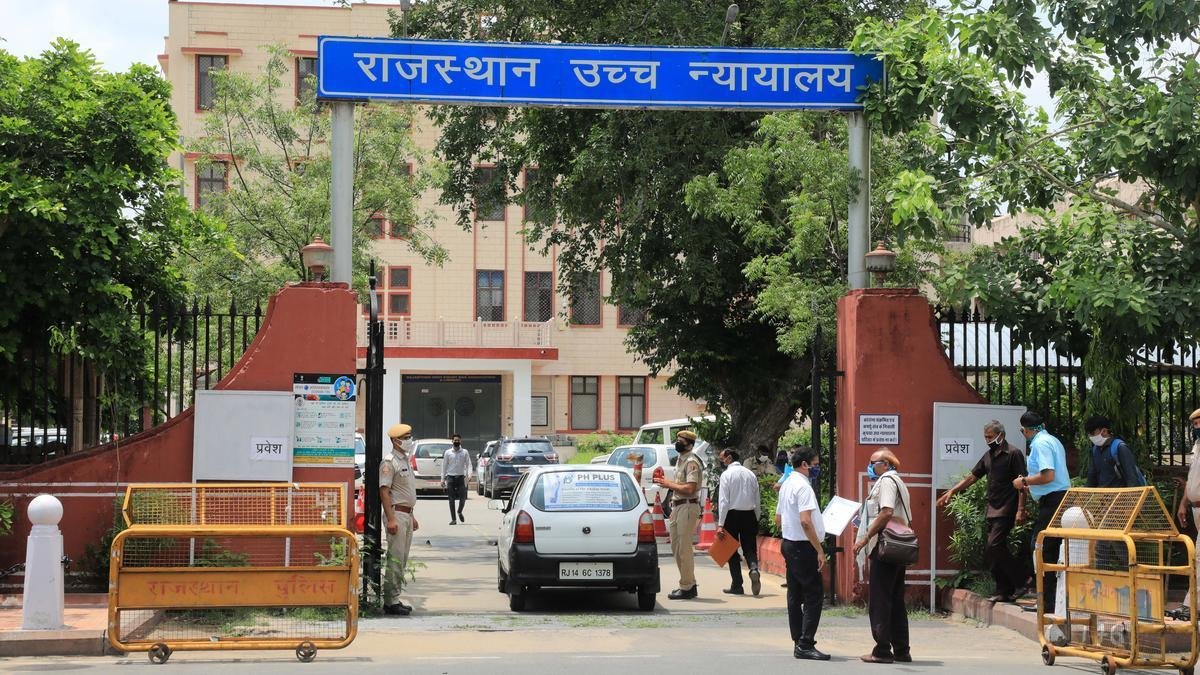
The Rajasthan High Court (Jodhpur Bench) has condemned an incident where a lawyer was allegedly manhandled by police at a station. The Court directed that law-enforcement officials undergo soft-skill training and stressed that lawyers and police are two limbs of the justice delivery system who must work with mutual respect and cooperation.
🔎 What Happened
The matter began when a lawyer—and his wife (also a lawyer)—accompanied a rape victim to a police station, and the recording of the victim’s statement was being done by a person in civil clothes. When the lawyers objected to the procedure, the SHO allegedly misbehaved, restrained the lawyer, and pushed him into a room. A video of the incident circulated widely.
The Court took suo motu cognizance, summoned police leadership, and was shown the video. The Commissioner of Police acknowledged the incident. The Court observed that such behaviour is “most unfortunate” and must be addressed.
✅ Court’s Orders & Rationale
The Court ordered that the concerned police officers receive soft-skill training to improve sensitivity and professionalism when dealing with advocates.
It directed the formation (or reconstitution) of Coordination Committees at district level, involving representatives of police, judiciary, and bar associations — meant to facilitate cooperation, grievance-redressal, and avoid such conflicts in future.
The Court also asked for a departmental inquiry and appropriate action against the officers responsible for the misconduct.

⚖️ Significance
The judgment underscores that police authority does not extend to treating lawyers like accused persons merely because they raise objections or demand compliance with procedure.
It reinforces that the two wings — police and bar — must operate on mutual respect and cooperation, essential for fair administration of justice.
The directive for soft-skill training and institutional grievance-mechanism suggests efforts to prevent such incidents and institutionalise better police-lawyer relations.
