




The Calcutta High Court has held that a divorced daughter is eligible to receive family pension if divorce proceedings were initiated before the death of the government-servant parent, even if the final decree of divorce was granted later.
The Court clarified that eligibility for family pension must be assessed based on the status and circumstances existing at the time of the employee’s death. If divorce proceedings were already pending, the daughter cannot be treated as a married daughter for the purpose of denying pensionary benefits.
Rejecting a narrow and technical interpretation of pension rules, the Court observed that family pension provisions are beneficial in nature and must be interpreted in a manner that advances social welfare, particularly for women who are financially dependent.
The Court further noted that denying pension merely because the formal decree of divorce was passed after the parent’s death would lead to unjust and arbitrary outcomes, defeating the object of family pension schemes.
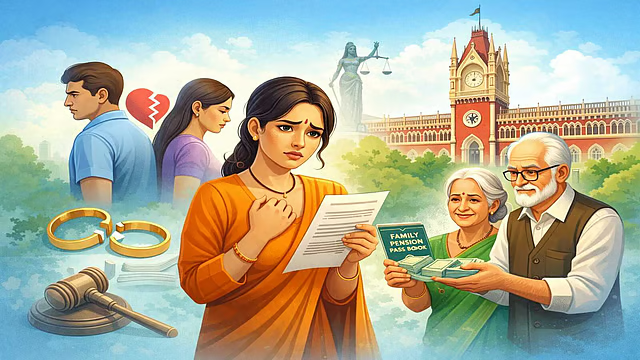
Accordingly, the High Court directed the authorities to process the claim and grant family pension to the divorced daughter in accordance with law.
