



Introduction
In a significant judgment strengthening transparency and accountability in public administration, the Supreme Court has held that the Special Police Establishment functioning under a Lokayukta cannot claim exemption from the Right to Information (RTI) Act on the ground that it is an “intelligence” or “security” organization.
The Court clarified that only those organizations specifically covered under the statutory exemptions of the RTI Act can deny information on that basis.
Background of the Case
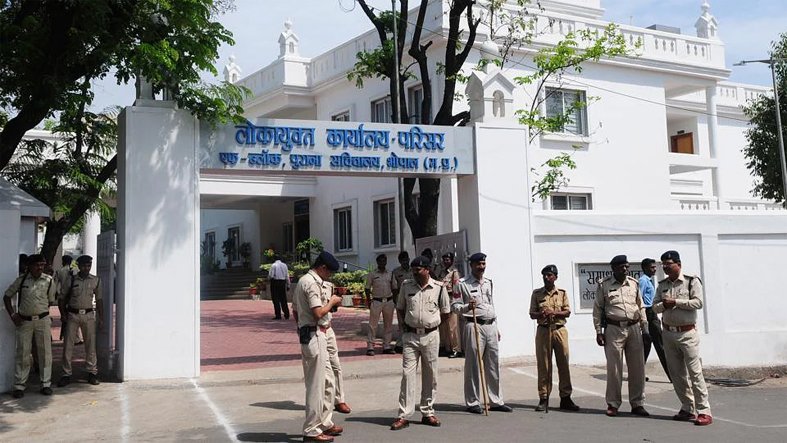
The dispute arose from an RTI application seeking information from a Lokayukta Special Police Establishment involved in anti-corruption investigations.
The authorities refused to provide the requested information, contending that the organization performed functions similar to intelligence and investigative agencies and therefore enjoyed exemption from disclosure obligations under the RTI Act.
The matter eventually reached the Supreme Court for determination of whether such an establishment could be treated as an exempt organization under the law.
Court’s Key Observation
The Supreme Court observed that:
- Exemptions under the RTI Act must be interpreted strictly.
- A public authority cannot claim exemption merely because it performs investigative or law enforcement functions.
- Only organizations specifically recognized under the statutory framework can invoke the exemption available to intelligence and security agencies.
- Transparency remains the general rule, while secrecy is the exception.
The Court emphasized that statutory exemptions cannot be expanded through interpretation beyond what Parliament has expressly provided.
Interpretation of RTI Act Exemptions
The Court examined the provisions of the RTI Act dealing with exempt organizations.
According to the judgment:
- The exemption available to intelligence and security organizations is limited to entities specifically notified under the law.
- Merely conducting investigations or collecting information does not automatically transform an organization into an intelligence agency.
- Public authorities seeking exemption must demonstrate clear legal authority for such protection.
The Bench stressed that exemption provisions should not be interpreted so broadly that they undermine the objective of transparency.
Importance of Accountability
The Supreme Court highlighted that anti-corruption institutions play a vital role in public administration and must remain accountable to the public within the framework established by law.
The Court observed that:
- Transparency promotes public confidence in governance.
- RTI serves as an important mechanism for ensuring accountability.
- Public authorities cannot avoid disclosure obligations without a valid statutory basis.
At the same time, the Court acknowledged that sensitive information may still be protected under other specific exemptions available under the RTI Act where applicable.
Balancing Transparency and Confidentiality
The judgment clarified that the decision does not mean every document or piece of information held by investigative agencies must automatically be disclosed.
The RTI Act already contains provisions protecting:
- Ongoing investigations.
- Confidential sources.
- Sensitive information affecting law enforcement.
- Information whose disclosure may harm public interests recognized by law.
The Court noted that such protections remain available on a case-by-case basis.

Court’s Decision
The Supreme Court held that the Lokayukta Special Police Establishment could not claim blanket exemption from the RTI Act by categorizing itself as an intelligence or security organization.
The Court ruled that the organization remains subject to RTI obligations unless a specific statutory exemption applies to the information sought.
Importance of the Ruling
This judgment is significant because it:
- Reinforces the principle of transparency in public administration.
- Clarifies the scope of exemptions under the RTI Act.
- Prevents unwarranted expansion of secrecy provisions.
- Strengthens accountability of anti-corruption and investigative bodies.
- Protects citizens’ right to seek information from public authorities.
Impact on RTI Jurisprudence
The ruling is likely to influence future disputes involving claims of exemption by investigative and enforcement agencies.
It reaffirms that:
- RTI exemptions must be narrowly interpreted.
- Investigative functions alone do not justify blanket secrecy.
- Public authorities must establish a clear legal basis before denying information requests.
This approach ensures that the objectives of transparency and accountability remain central to the RTI framework.
Conclusion
The Supreme Court’s decision marks an important reaffirmation of the citizen’s right to information. By holding that a Lokayukta Special Police Establishment is not automatically exempt as an intelligence or security organization, the Court has strengthened the principle that transparency is the norm and secrecy must remain a carefully limited exception under the RTI Act.
