



Introduction
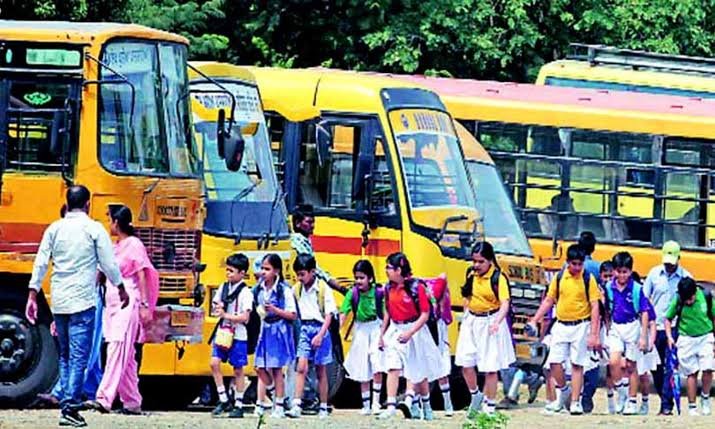
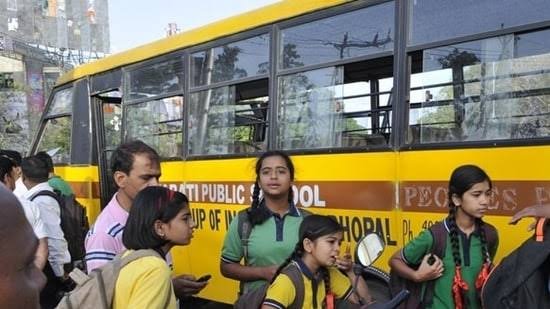
In an important ruling on the responsibility of educational institutions, the Karnataka High Court has held that a school’s duty to ensure the safety of its students extends beyond the classroom and includes the time they spend travelling in a school bus. Refusing to quash criminal proceedings against a private school, the Court observed that a school bus is an extension of the school environment and that institutions have a legal obligation to provide a safe atmosphere during transportation.
Background of the Case
The case arose after a fourth-standard student allegedly suffered a serious eye injury while travelling in a school bus. According to the allegations, a few students sprayed coloured confetti into the child’s eyes, resulting in permanent loss of vision in one eye and approximately 40% permanent disability.
Following the incident, an FIR was registered against the school and its management. The school approached the High Court seeking quashing of the criminal proceedings, contending that it could not be held criminally liable for the unexpected act of students.
Court’s Key Observations
The Karnataka High Court declined to interfere with the investigation and made the following observations:
- A school’s responsibility towards students is not confined to classroom teaching.
- The duty of care continues while children are travelling in school buses arranged or operated by the institution.
- School authorities are expected to ensure adequate supervision and safety measures during transportation.
- Allegations indicating negligence require proper investigation and cannot be dismissed at the initial stage.
School Bus Is an Extension of the School
The Court emphasized that transportation provided by a school forms part of its educational ecosystem.
According to the Court:
- Students remain under the school’s supervision while travelling in a school bus.
- Schools are expected to adopt reasonable safety protocols to prevent avoidable incidents.
- The responsibility to safeguard children does not end once they leave the school building if they continue to travel using school-provided transport.
Why the FIR Was Not Quashed
The High Court observed that the allegations disclosed a prima facie case requiring investigation.
The Court held that:
- Whether adequate supervision was provided is a matter to be determined during investigation or trial.
- At the stage of considering a petition to quash an FIR, the Court is not expected to conduct a detailed examination of disputed facts.
- Criminal proceedings should not be terminated prematurely when the allegations disclose a possible offence.
Importance of the Judgment
The ruling is significant because it:
- Expands the understanding of a school’s duty of care beyond classroom premises.
- Reinforces the obligation of educational institutions to ensure student safety during school transport.
- Highlights the importance of proper supervision inside school buses.
- Clarifies that negligence allegations involving serious injuries deserve a full investigation before any conclusion is reached.
Conclusion
The Karnataka High Court’s decision underscores that schools cannot treat transportation as an area outside their responsibility. By holding that the duty of care extends to children travelling in school buses and refusing to quash the FIR at the preliminary stage, the Court reaffirmed that student safety is a continuous obligation. The ruling serves as an important reminder that educational institutions must maintain effective supervision and safety measures wherever students remain under their care.
