



Introduction
In an important judgment concerning constitutional equality and road safety laws, the Bombay High Court has upheld the statutory exemption granted to Sikhs wearing turbans from the mandatory requirement of wearing helmets while riding two-wheelers. The Court held that the exemption is based on a reasonable classification under Article 14 of the Constitution and does not amount to discrimination on the ground of religion.
Background of the Case
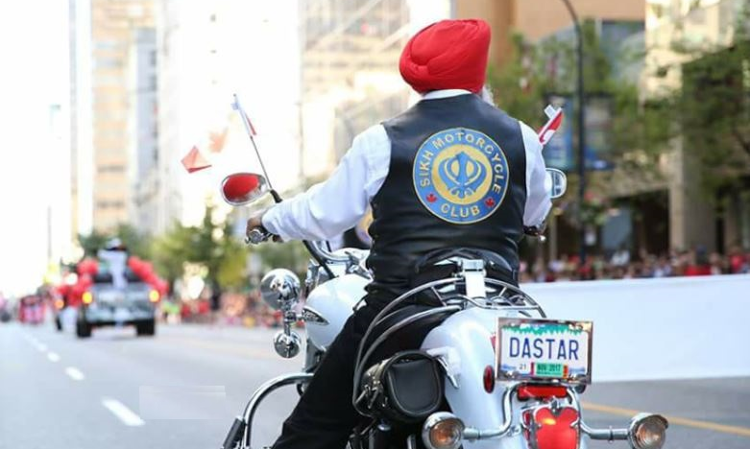
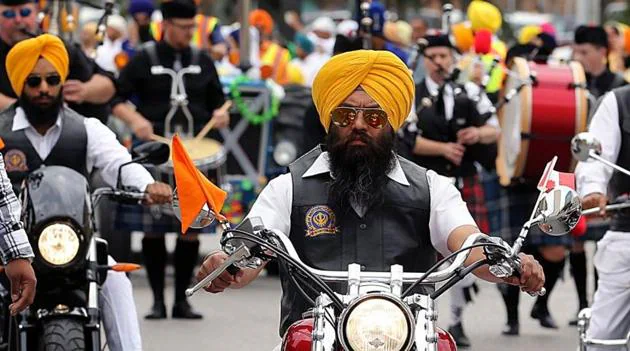
The case arose from a petition filed by a law student challenging the constitutional validity of the exemption provided under Section 129 of the Motor Vehicles Act, which exempts Sikh persons wearing turbans from the requirement of wearing protective headgear while driving or riding a motorcycle.
The petitioner argued that granting such an exemption to a particular community violated the constitutional guarantee of equality before the law under Article 14.
The matter came before the Nagpur Bench of the Bombay High Court for consideration.
Court’s Key Observations
The Bombay High Court dismissed the petition and observed that:
- Article 14 permits reasonable classification where there is an intelligible basis for treating one class differently from another.
- The exemption granted to Sikhs is not founded merely on religion or caste.
- The classification has a rational connection with the objective of accommodating persons who wear turbans as part of their identity.
- A reasonable classification does not violate the constitutional guarantee of equality merely because it treats different classes differently.
Understanding Article 14
The Court reiterated that Article 14 guarantees equality before the law and equal protection of the laws, but it does not require identical treatment in every situation.
According to the Court:
- The Constitution allows the legislature to create classifications if they are reasonable.
- Such classification must distinguish one group from another on an intelligible basis.
- The distinction must have a rational relationship with the purpose sought to be achieved by the law.
The Court held that the helmet exemption satisfies these constitutional requirements.
Exemption Is Not Based Solely on Religion
One of the central findings of the judgment was that the exemption should not be viewed as a religious privilege.
The Court observed that:
- The exemption is linked to the practical difficulty arising from wearing a turban.
- It represents a permissible legislative classification rather than preferential treatment.
- Every statutory exemption does not automatically amount to unconstitutional discrimination.
The Bench concluded that the provision reflects a balance between public safety considerations and legislative policy.
Why the Petition Was Rejected
The High Court found no constitutional infirmity in the challenged provision.
Accordingly, it held that:
- The exemption does not violate Article 14.
- The legislative classification is reasonable and legally sustainable.
- Courts should not interfere with such policy decisions unless they are manifestly arbitrary or unconstitutional.
As a result, the writ petition challenging the helmet exemption was dismissed.
Significance of the Judgment
The ruling is important because it:
- Clarifies the scope of reasonable classification under Article 14.
- Reaffirms that equality does not always require identical treatment.
- Upholds the constitutional validity of the helmet exemption available to Sikhs wearing turbans under the Motor Vehicles Act.
- Explains the distinction between permissible legislative classification and unconstitutional discrimination.
Conclusion
The Bombay High Court’s decision reinforces the constitutional principle that equality under Article 14 allows reasonable classification where there is a valid legal basis for differential treatment. By upholding the helmet exemption for Sikhs wearing turbans, the Court held that the provision represents a legitimate legislative classification rather than discrimination based on religion. The judgment offers important guidance on the interpretation of Article 14 and the balance between equality and statutory exemptions.
