



Introduction
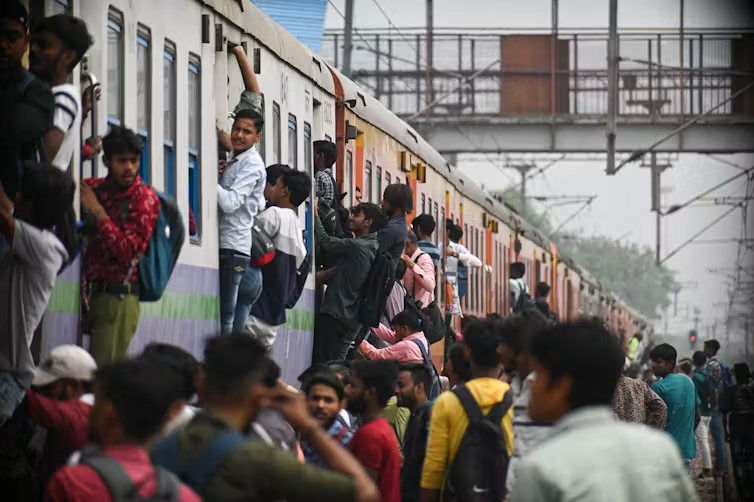
In a significant judgment concerning railway passenger safety and dignity, the Supreme Court urged the Indian Railways to take effective measures to prevent overcrowding in trains. The Court also suggested that the expression “second class passenger” should no longer be used, observing that while coaches may be classified into different travel classes, passengers themselves should not be described in a manner that is inconsistent with the constitutional values of equality and dignity.
Background of the Case
The observations were made while the Supreme Court was deciding a railway accident compensation case involving the death of a passenger. During the proceedings, the Court examined issues relating to railway safety, overcrowding in coaches, and the terminology used by the Railways to describe passengers travelling in different classes.
Court’s Key Observations
The Supreme Court observed that:
- Overcrowding in trains poses a serious risk to passenger safety and can lead to avoidable accidents.
- Indian Railways should adopt effective measures to reduce overcrowding and ensure safer travel.
- The expression “second class passenger” is inappropriate because the classification relates to the coach, not the person travelling in it.
- Language used by public authorities should reflect the constitutional principles of equality, dignity, and respect for every individual.
“Second Class” Should Describe the Coach, Not the Passenger
The Court emphasized that travel class refers only to the category of the railway coach.
According to the Court:
- Coaches may be designated as first class, second class, or other categories.
- Passengers should not be identified or described based on the class of coach they occupy.
- Considering India’s historical social and class divisions, such terminology is inconsistent with the spirit of the Constitution.
Need to Address Overcrowding
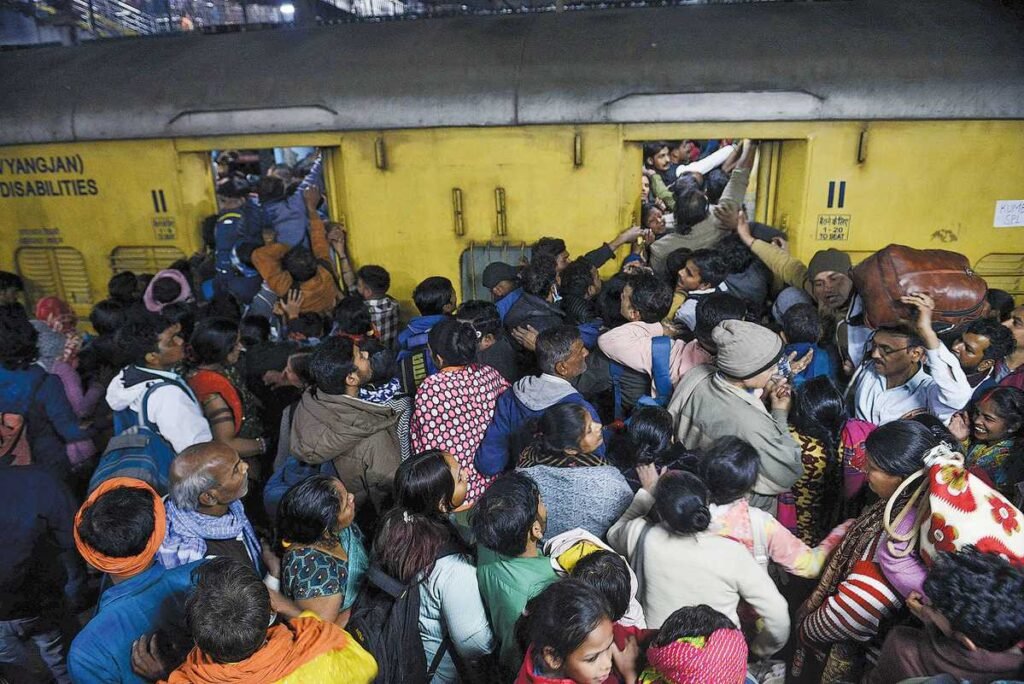
The Bench highlighted that overcrowding is a persistent safety concern.
The Court observed that:
- Excessive crowding increases the risk of passengers falling from moving trains and suffering serious injuries or death.
- Railway authorities should strengthen crowd management and operational measures to provide safer travel conditions.
- Passenger safety must remain a primary responsibility of the Railways.
Court’s Decision
While deciding the compensation dispute, the Supreme Court also issued broader observations urging Indian Railways to improve passenger safety by preventing overcrowding and to reconsider the continued use of the term “second class passenger”, suggesting that only railway coaches—not people—should be classified in that manner.
Significance of the Judgment
This ruling is important because it:
- Highlights the need for stronger measures to prevent overcrowding in trains.
- Reinforces that passenger safety is a fundamental responsibility of the Railways.
- Promotes the constitutional values of equality and human dignity in official terminology.
- Encourages public authorities to use language that respects the dignity of every citizen.
- Reflects a broader commitment to improving both railway safety and passenger rights.
Conclusion
The Supreme Court’s observations underscore that railway travel should be both safe and dignified. By urging Indian Railways to address overcrowding and recommending that the term “second class passenger” be discontinued, the Court highlighted that public institutions must not only protect passengers from physical harm but also respect their constitutional dignity. The judgment serves as an important reminder that every traveller, irrespective of the class of coach, deserves equal respect and safe conditions while using public transport.
