



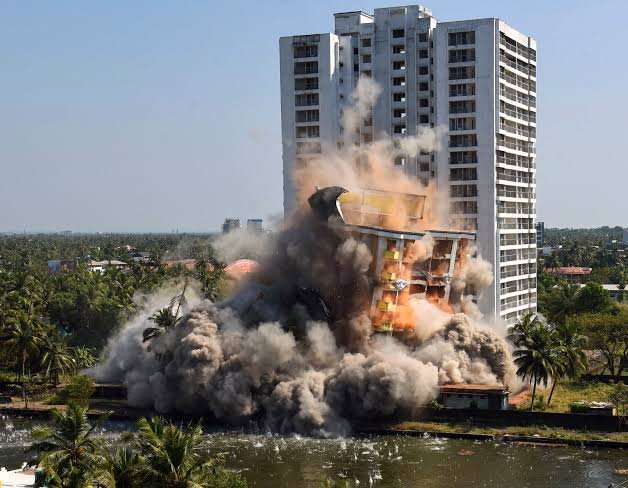
The Supreme Court has held that innocent flat purchasers who relied upon government permissions and official revenue records cannot be made to suffer for lapses committed by government authorities.
While upholding the cancellation of a ryotwari patta granted over land recorded as a government water body in Tamil Nadu, the Court directed the State Government to provide a suitable alternative site to the owners of 20 flats before demolishing their homes.
A Bench of Justice S.V.N. Bhatti and Justice N.V. Anjaria observed that bona fide purchasers ordinarily rely upon the presumptive value of revenue records and town survey entries while purchasing property. Where government authorities themselves issue permissions and alter official records, purchasers cannot reasonably be expected to anticipate that the property would later be treated as an unauthorised construction.
Background Of The Case
The dispute concerned land situated in Survey No. 572 at Thirumullaivoyal Village in Tiruvallur District, Tamil Nadu.
The land, measuring approximately 0.72 acres out of a larger extent, was recorded in the 1911 Resurvey and Resettlement Register as “Government Poramboke – Kanakkan Kuttai”, indicating a government water body.
In 2011, however, the District Revenue Officer, Tiruvallur, granted a ryotwari patta in favour of P. Ramadoss, treating the land as ryoti land.
Ramadoss subsequently mortgaged the property to Tamil Nadu Mercantile Bank Limited for credit facilities of ₹3.40 crore. A portion measuring 0.22 acres was later settled in favour of his wife, who executed a power of attorney in favour of a builder.
The builder thereafter constructed 20 residential flats on the property and sold them to individual purchasers along with undivided shares in the land.
Patta Later Cancelled By Revenue Authorities
The grant of the patta was subsequently challenged by a third party.
After an inquiry, the Commissioner of Land Administration cancelled the patta in December 2019, holding that it had been granted over land that was originally classified as a government water body.
The Madras High Court upheld the cancellation and directed removal of unauthorised structures and restoration of the water body.
A flat owner and Tamil Nadu Mercantile Bank thereafter approached the Supreme Court challenging the High Court’s decision.
Supreme Court Upholds Protection Of Water Body
The Supreme Court agreed that the land could not have been converted into private property through the grant of a ryotwari patta.
The Court examined the original revenue records and found that the property had been classified as government poramboke land associated with a water body.
It held that such land could not be validly granted under the Tamil Nadu Estates (Abolition and Conversion into Ryotwari) Act, 1948.
The Court also relied on Section 14-A of the Act, which prevents the grant of ryotwari pattas over private tanks or ooranis and provides for cancellation where such pattas have been granted.
Accordingly, the Supreme Court refused to interfere with the cancellation of the patta.
Government Authorities Had Approved The Construction
While upholding the legal status of the water body, the Supreme Court took a different approach concerning the plight of the flat purchasers.
The Court noted that government authorities had themselves issued building permissions and that the revenue records had also been altered.
The municipal authorities approved the building plans, while revenue authorities approved changes to the Town Survey Land Register and subdivision of the property.
These official actions, according to the Court, gave bona fide purchasers reason to believe that the property was legally available for construction and purchase.
The Court observed that an ordinary purchaser would naturally rely upon official revenue and town survey records while deciding whether to purchase a property.
Flat Buyers Should Not Suffer For Government Lapses
The Supreme Court emphasised that the State cannot create an impression through its own official records and permissions that a property is legally available, and later place the entire burden of its own administrative failure on innocent purchasers.
The Court was conscious that demolition of the flats would cause serious financial hardship to the families who had purchased them.
It noted that ordering demolition without considering the position of the flat purchasers and their remedies against the developer and landowner could cause irreparable financial injury and leave families without homes.
The Court therefore adopted a balanced approach: protection of the water body would continue, but innocent purchasers would first be provided a reasonable alternative.
Alternative Site To Be Provided Before Demolition
The Supreme Court directed the Chief Secretary of Tamil Nadu and the District Collector, Tiruvallur, to allot a vacant site of commensurate value to the flat owners represented by their society.
The alternative site should preferably be provided within six months.
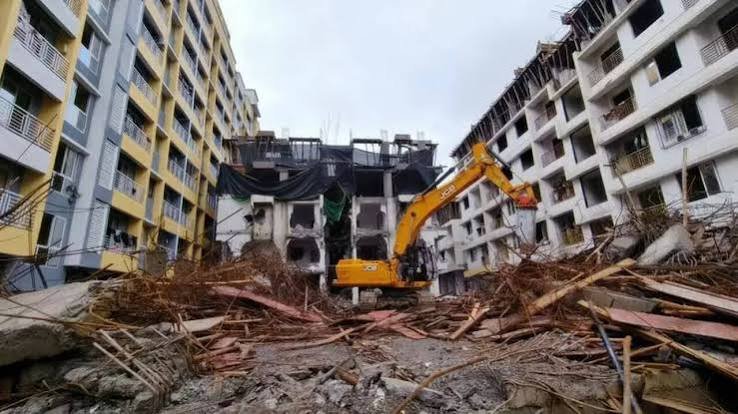
Only after the alternative site is allotted would the State proceed with demolition of the residential construction covering approximately 0.22 acres.
This direction was issued without disturbing the statutory protection applicable to the water body.
Flat Owners Can Pursue Remedies Against Developer
The Supreme Court also clarified that the flat purchasers and the bank would remain free to pursue appropriate legal remedies against the developer, landowner or mortgagor.
Thus, the Court did not transfer the legal consequences of the invalid patta to the water body or recognise the disputed construction as lawful.
Instead, it ensured that the innocent purchasers would not be left without a remedy because of mistakes or irregular actions by government officials.
The Court also granted liberty to the State Government to initiate or conclude disciplinary proceedings against officials responsible for failing to properly maintain the relevant land and revenue records.
Court’s Balanced Approach
The judgment draws an important distinction between the legal status of the land and the equities arising from government conduct.
The Supreme Court held that the water body’s legal protection could not be compromised merely because flats had subsequently been constructed on the land.
At the same time, the Court refused to ignore the position of purchasers who had relied upon official documents and permissions issued by government authorities.
The result is that the patta remains cancelled and the water body is protected, while the affected families receive an alternative site before demolition.
Legal Significance
The judgment is significant for property purchasers who rely on government records, building approvals and other official permissions before investing their savings in residential property.
It reinforces that innocent purchasers should not ordinarily be made to bear the entire burden of administrative failures committed by government authorities.
At the same time, the decision does not permit private rights to override statutory protection of water bodies. Where land is legally protected as a water body or government poramboke, subsequent permissions or changes in records cannot permanently alter its legal character.
The ruling therefore balances environmental and public-interest protections with fairness to bona fide purchasers who relied on official acts of the State.
