



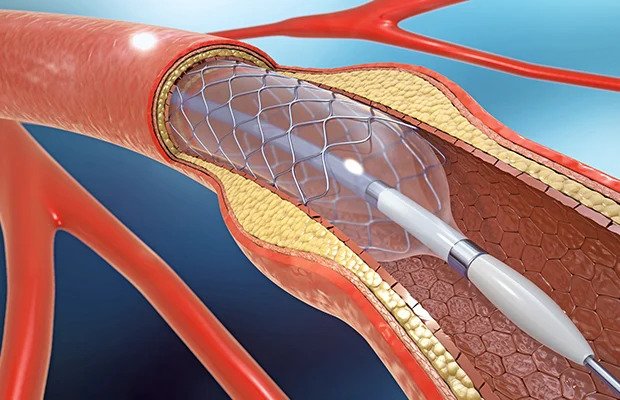
The Rajasthan High Court has held that a patient who undergoes treatment at a government hospital and is compelled to purchase required stents from a private supplier because the stents are unavailable at the government hospital is entitled to full reimbursement of the expenditure incurred.
The Division Bench observed that the right to health and affordable medical treatment forms part of the fundamental right under Article 21 of the Constitution. Therefore, provisions governing reimbursement of medical expenses should receive a liberal interpretation where a patient has been forced to incur expenditure because the required medical equipment was unavailable at the government hospital.
Background Of The Case
The respondent was suffering from a cardiac condition and underwent treatment at Mathura Das Mathur Hospital, Jodhpur, a government hospital.
During the treatment, four stents were required to be implanted. Since the necessary stents were not available at the government hospital, they were procured from a private supplier at a cost of approximately ₹2.70 lakh.
The authorities, however, reimbursed only around ₹1.70 lakh, leaving a substantial portion of the expenditure unreimbursed. The patient therefore approached the Rajasthan High Court seeking reimbursement of the remaining amount.
Single Judge Directed Full Reimbursement
The Single Judge of the High Court ruled in favour of the patient and directed the State authorities to reimburse the entire cost of the stents.
The State challenged this order before the Division Bench, contending that the reimbursement was contrary to the limits prescribed under the Rajasthan Civil Services (Medical Attendance) Rules, 2013.
The State relied particularly upon Appendix IX, which contained restrictions concerning reimbursement for stents, including a provision that reimbursement for more than three stents would not ordinarily be allowed.
State’s Argument Rejected
The State argued that the Single Judge had incorrectly directed reimbursement for four stents when the applicable rules restricted reimbursement to three.
The patient, on the other hand, contended that once treatment was being provided at a government hospital, it was the hospital’s responsibility to provide the necessary medical equipment and consumables.
Since the required stents were unavailable, the patient had no practical option except to obtain them from the private market. Therefore, the expenditure incurred for procuring those stents should be fully reimbursed.
Right To Health Under Article 21
The Division Bench comprising Justice Sanjay K. Agarwal and Justice Vinit Kumar Mathur referred to Supreme Court judgments recognising the right to health and medical care as part of Article 21.
The Court relied upon the Supreme Court’s decision in Consumer Education & Research Centre v. Union of India, which recognised the right to health and medical care as a fundamental right.
The Bench also referred to the Supreme Court’s decision in In Re: The Proper Treatment of COVID-19 Patients and Dignified Handling of Dead Bodies in the Hospitals, wherein the right to health was recognised as a fundamental right that also encompasses access to affordable treatment.
Medical Reimbursement Rules Must Be Construed Liberally
Against this constitutional background, the High Court held that provisions relating to reimbursement of medical treatment cannot be interpreted in a manner that unfairly burdens a patient who was compelled to incur expenditure because the required facility or medical equipment was unavailable at a government hospital.
The Court therefore adopted a liberal approach towards the reimbursement provisions and upheld the direction requiring the State to reimburse the remaining amount.
The ruling is also consistent with an earlier Rajasthan High Court decision in Smt. Mohan Kanwar Bhansali v. State of Rajasthan, where the Court had held that expenses incurred for stents purchased from a private medical shop could not be denied when the required stents were unavailable at the government hospital and the patient had been compelled to purchase them privately.

State Directed To Pay Remaining Amount
The Division Bench upheld the Single Judge’s order and directed the State authorities to reimburse the remaining amount payable towards the stents.
The Court thereby rejected the challenge raised by the State and maintained the direction for full reimbursement of the expenditure incurred by the patient for the necessary stents.
Significance Of The Judgment
The judgment highlights several important principles:
- The right to health is recognised as part of the fundamental right under Article 21.
- A patient receiving treatment at a government hospital should not ordinarily be financially burdened because an essential medical consumable is unavailable there.
- Where a patient is compelled to purchase necessary medical equipment or consumables from a private supplier due to non-availability at the government hospital, the expenditure may be eligible for full reimbursement.
- Medical reimbursement provisions should be interpreted liberally in circumstances where the patient had no practical alternative.
- Technical reimbursement limits cannot be applied mechanically where doing so would defeat the patient’s right to access necessary medical treatment.
Conclusion
The Rajasthan High Court’s decision reinforces that the responsibility for providing necessary medical facilities cannot be shifted to a patient merely because a required stent or medical consumable was unavailable at a government hospital.
Where the patient undergoes treatment at the government hospital and is compelled to purchase the necessary equipment from a private supplier, the State must consider reimbursement in light of the patient’s constitutional right to health and affordable medical treatment.
