



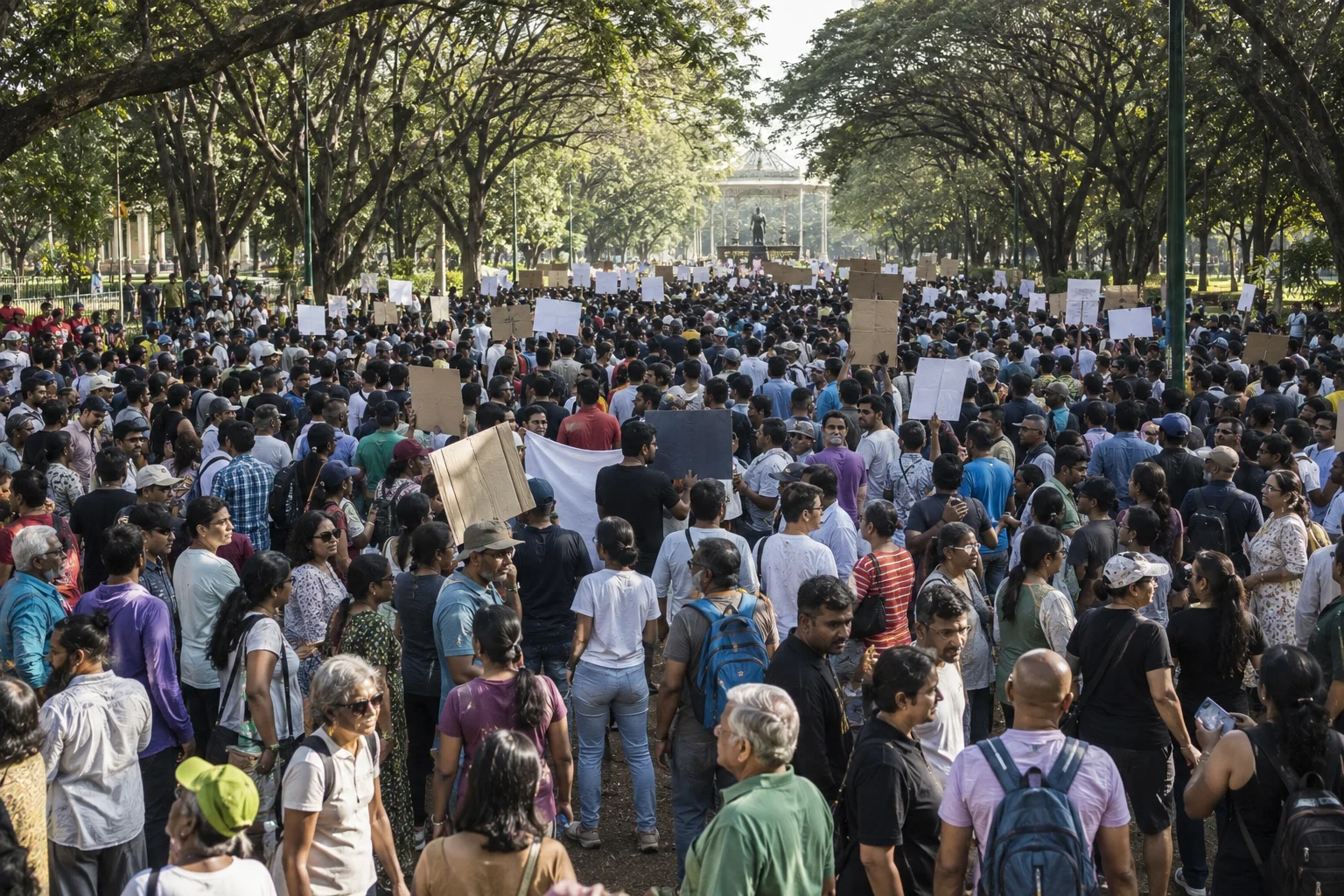
The Karnataka High Court has quashed a criminal case against two men who were accused of blocking a highway during a protest following a fatal road accident. The Court held that merely being present at a protest cannot automatically make a person responsible for every offence alleged to have occurred in connection with the gathering.
Justice Suraj Govindaraj observed that while blocking a public highway cannot be approved as a method of protest, the criminal law must be applied by examining the specific conduct attributed to each accused and the circumstances in which the protest took place.
Background Of The Case
The case arose from a protest held at a location in Bantwala, Dakshina Kannada, after a fatal accident had occurred at the same place a day earlier.
The petitioners, Abdul Samad and another resident, along with other villagers, gathered at the location to protest and draw the attention of the authorities towards the need for appropriate road safety measures.
A complaint was subsequently lodged on June 2, 2025, alleging that the petitioners and others had blocked the highway and prevented vehicles from passing through.
The police registered an FIR at Vitla Police Station invoking provisions of the Bharatiya Nyaya Sanhita, 2023, including Sections 189(2), 189(3), 191(2), 126(2) and 190, concerning offences including unlawful assembly, rioting and wrongful restraint.
The accused approached the High Court seeking quashing of the criminal proceedings.
Petitioners’ Stand
The petitioners argued that the gathering was a spontaneous response to the fatal accident and was intended to highlight concerns regarding road safety.
They submitted that there was no intention to commit any criminal offence and that their participation in the protest could not, by itself, justify prosecution under all the penal provisions invoked by the police.
They therefore sought quashing of the FIR on the ground that the allegations did not establish the necessary ingredients of the offences against them.
Karnataka High Court Examines The Circumstances
The High Court considered the circumstances in which the gathering had taken place.
Justice Suraj Govindaraj noted that the protest had occurred immediately after a fatal accident at the same location. According to the Court, this immediate background was relevant while determining the nature of the petitioners’ conduct and whether the allegations justified continuation of the criminal proceedings.
At the same time, the Court made it clear that a genuine grievance does not give protesters an unrestricted right to block a public highway.
The Court observed that highways are meant for public movement and preventing vehicles from passing can cause considerable inconvenience and may also affect public safety. The villagers could have approached the authorities through other means to raise their concerns.
Mere Presence Does Not Establish Every Alleged Offence
The High Court, however, drew a distinction between the improper method adopted during the protest and individual criminal liability.
The Court observed that the fact that the protest was prompted by a fatal accident did not justify blocking the highway. However, the improper manner of protest, by itself, could not establish that every person present at the gathering had committed all the offences alleged against them.
The Court also noted that there was no specific allegation of damage to public property or vehicles involved in the incident.
It held that the material placed before it did not justify treating the petitioners’ participation as criminal conduct warranting prosecution under all the provisions invoked in the FIR.
Criminal Law Must Be Applied To Specific Conduct
The Court emphasised that criminal proceedings must be based on the actual allegations and the specific conduct attributed to the accused.
Participation in a protest or gathering cannot automatically be treated as participation in every offence that may allegedly occur during or around that gathering.
The Court noted that public inconvenience cannot be ignored merely because a protest is based on a genuine grievance. At the same time, the criminal law must be applied after considering the actual allegations and the circumstances in which the conduct took place.
This approach ensures that criminal liability is not imposed merely because a person happened to be part of a gathering, without sufficient material connecting that individual with the particular offence alleged.
Court Clarifies It Does Not Approve Highway Blockades
Before concluding the matter, the High Court specifically clarified that its observations were confined to the facts and circumstances presented in the case.
The judgment should not be understood as approving the blocking of public highways as a legitimate method of protest.
The Court therefore maintained the distinction between the right to raise a genuine public grievance and the obligation to comply with law. A protest may have a legitimate purpose, but the manner in which it is conducted must still remain within legal limits.
High Court Quashes FIR
After examining the complaint and the material placed before it, the Karnataka High Court allowed the criminal petition and quashed the FIR registered at Vitla Police Station against the two petitioners.
The decision does not establish that blocking a public highway during a protest is lawful. Instead, it reinforces the principle that criminal liability must be determined on the basis of the specific allegations and evidence against each accused.
The judgment is significant because it prevents mere participation in a protest from being treated as automatic proof of involvement in every alleged offence connected with the gathering.
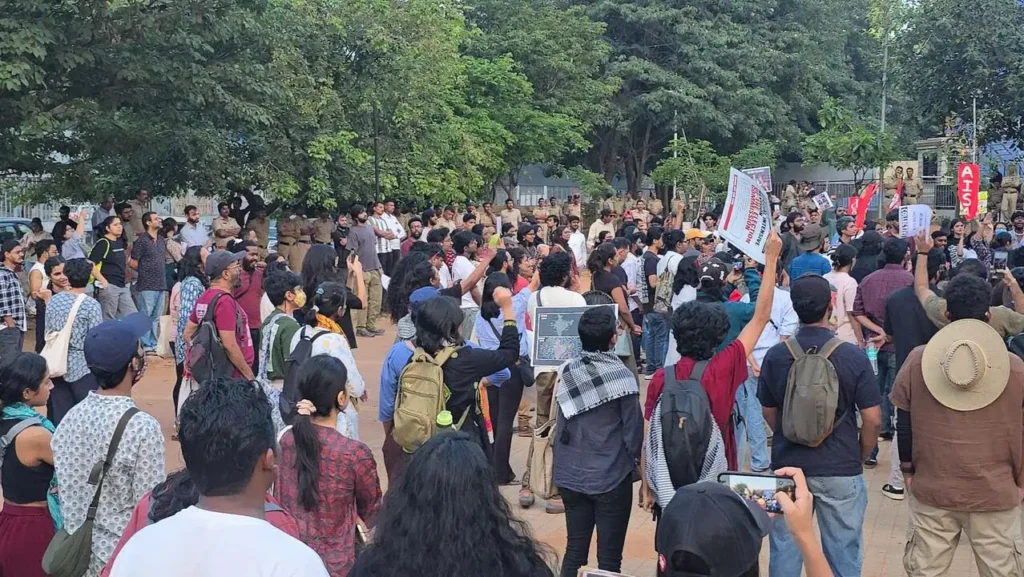
Legal Significance
The ruling highlights an important principle of criminal law: individual criminal liability must be supported by specific allegations and material connecting the accused to the offence.
While citizens may be held accountable for unlawful conduct during a protest, mere presence at a gathering cannot automatically result in prosecution for every offence allegedly committed by others.
The judgment also demonstrates the balance courts must maintain between recognising genuine public grievances and ensuring that public order and legal restrictions are respected.
