



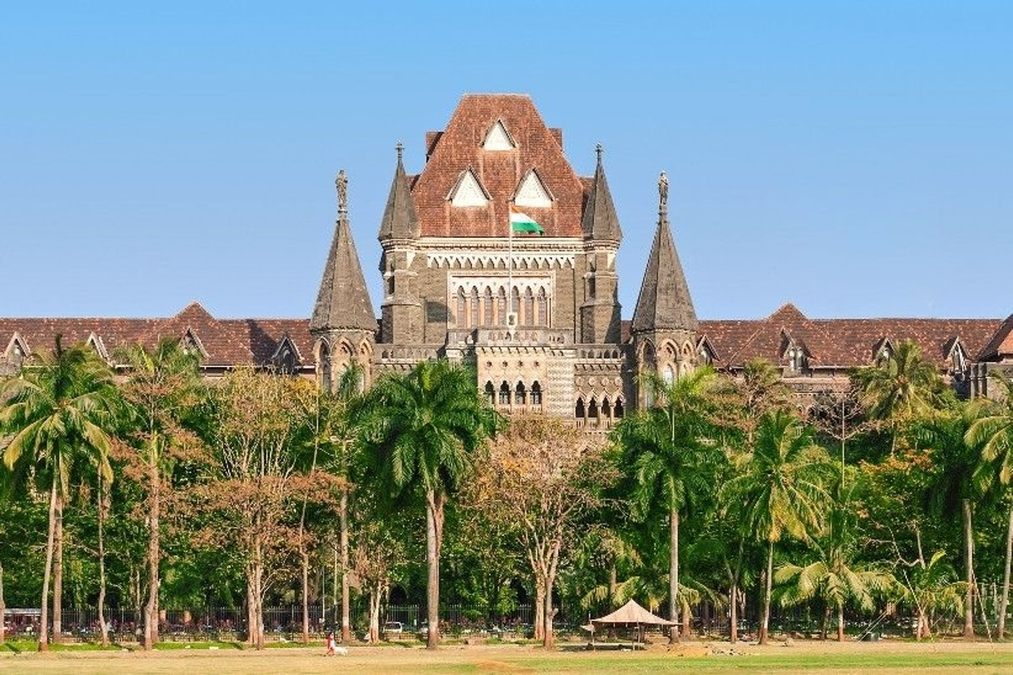
The Maharashtra Government has defended the constitutional validity of the Maharashtra Special Public Security Act (MSPSA) before the Bombay High Court, stating that Maharashtra has emerged as a centre of the Maoist urban network because of its large urban population.
The State submitted that Maharashtra had no specific legal framework to prohibit organisations allegedly functioning as fronts for Left Wing Extremist activities, unlike several other States affected by Left Wing Extremism. It argued that the MSPSA was enacted to address this legal gap and prevent unlawful, subversive and extremist activities.
The submissions were made before a Division Bench comprising Chief Justice Mahesh Chandra Tripathi and Justice Advait Sethna in petitions challenging the constitutional validity of the legislation.
Background Of The Case
The constitutional validity of the MSPSA has been challenged before the Bombay High Court by the Indian National Congress (Maharashtra) and the People’s Union for Civil Liberties (PUCL).
The petitioners have questioned various provisions of the legislation, including the powers granted to authorities to act against organisations allegedly involved in unlawful activities. The challenge raises issues concerning fundamental rights, including the freedom of speech and expression under Article 19(1)(a) of the Constitution.
The State, through an affidavit filed by Pritamkumar Jawale, Deputy Secretary, Home Department, opposed the petitions and defended the necessity of the legislation.
State Says Maharashtra Is A Centre Of Urban Maoist Network
The State relied upon various incidents, including the Bhima-Koregaon violence and the subsequent investigations in the Elgar Parishad case, to explain the need for a legal framework dealing with alleged urban Maoist activities.
According to the State, investigations in these matters brought attention to alleged networks and organisations operating in urban areas in support of Maoist activities. The Government also referred to directions issued by the Ministry of Home Affairs concerning measures to counter the activities of the CPI (Maoist) in urban areas.
The State claimed that Maharashtra has 64 alleged Maoist frontal organisations, which it described as the highest number among the States concerned. It contrasted this with States such as Andhra Pradesh, Telangana, Chhattisgarh, Odisha and Jharkhand, where similar organisations have allegedly been prohibited under existing public security laws.
The Government therefore argued that Maharashtra required a similar legal mechanism to address the situation.
Objective Of The Special Public Security Act
The State submitted that the MSPSA has been enacted to establish a legal framework to prevent and deal with unlawful, subversive and extremist activities.
According to the Government, extremist movements do not operate only through direct violence. They may also depend upon logistical support, financial resources, safe locations and institutional networks.
The State argued that the legislation is intended to enable authorities to act against such support structures before they result in violence or loss of life.
The Government further submitted that the Act seeks to balance individual freedoms with the State’s responsibility to maintain public order and national integrity.
State Responds To Article 19 Challenge
The petitioners have raised concerns that the Act could restrict legitimate dissent and interfere with constitutionally protected freedoms.
Responding to this challenge, the State argued that the rights guaranteed under Article 19(1)(a) are not absolute and can be subject to reasonable restrictions under Article 19(2), including restrictions imposed in the interests of public order.
The Government maintained that persons and organisations not involved in activities aimed at threatening or weakening the nation would have no reason to be adversely affected by the legislation.
Government Points To Public Consultation
The State also rejected allegations that the legislation was enacted without adequate public consultation.
It informed the High Court that more than 15,000 written objections and suggestions were considered by the Joint Committee before the legislation was finalised.
According to the Government, several changes were subsequently made to the Bill. These included modifications to the title and preamble and changes to the composition of the Advisory Board.
The State further pointed out that the final legislation provides for investigation by officers not below the rank of Assistant Commissioner of Police or Deputy Superintendent of Police.
The composition of the Advisory Board was also modified to include judicial experience, including a retired High Court Judge and a serving or former District Judge, along with the Public Prosecutor or Government Pleader of the High Court.
State Defends The Term ‘Left Wing Extremist Organisation’
Another issue raised before the Court concerns the terminology used in the legislation.
The State argued that extremist organisations may operate under different names or through organisations that appear to have legitimate social objectives. It therefore defended the use of the expression “Left Wing Extremist Organisation” in the final legislation.
The Government submitted that the term is intended to cover organisations having a link or nexus with unlawful activities and not ordinary social organisations performing legitimate activities.
Challenge To Property Demolition Powers
The petitions also question provisions under the MSPSA that permit authorities to take action concerning the houses and properties of persons booked under the legislation.
The State defended the overall framework of the Act, maintaining that it was necessary to address support structures associated with extremist activities.
However, the constitutional validity of these provisions and the broader challenges to the legislation remain to be examined by the High Court.

Bombay High Court To Hear The Matter Further
The Bombay High Court has not yet decided the constitutional validity of the Maharashtra Special Public Security Act.
The Court is expected to hear the matter further, with the next hearing listed for 13 October 2026. The petitioners have been given an opportunity to respond to the State’s affidavit.
The proceedings will therefore determine whether the provisions of the MSPSA withstand constitutional scrutiny, particularly in relation to fundamental rights, legislative safeguards and the powers granted to the executive.
